Signs Your Crawl Space Has Water
- A musty or earthy smell inside the house, especially near floor vents
- Floors that feel cold, soft, or bouncy
- A sump pump that runs constantly, or not at all
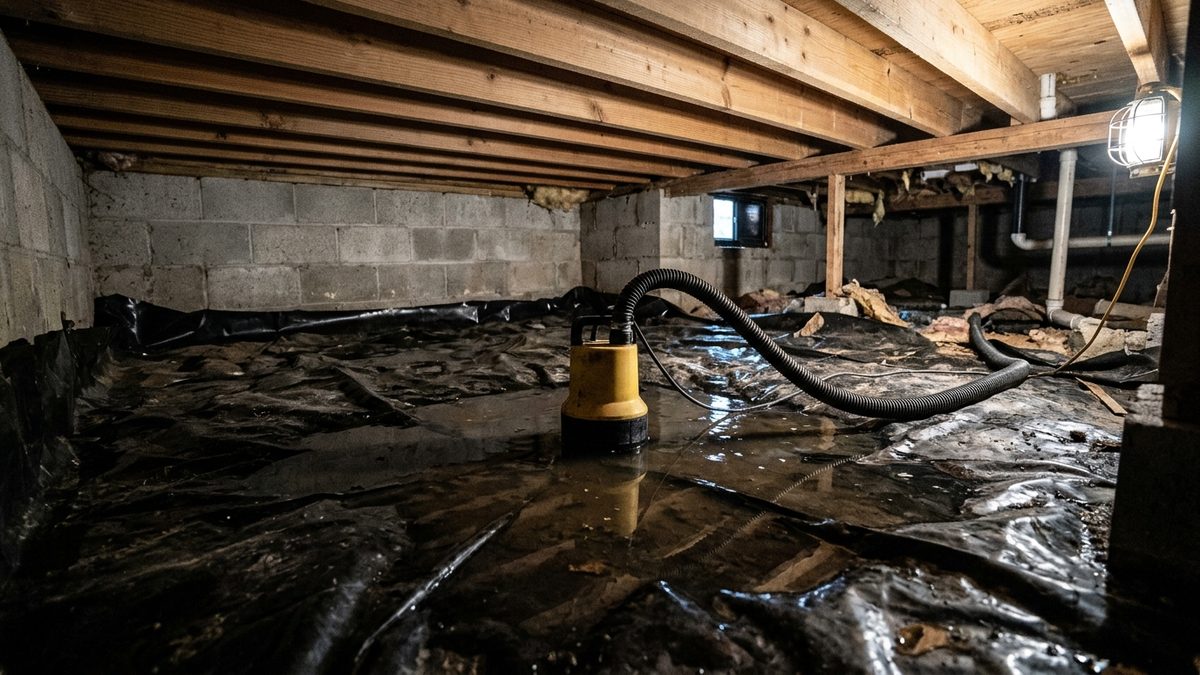
- The plastic vapor barrier floating or pooled with water when you open the access hatch
- Insulation hanging down from between the floor joists
- Higher humidity, condensation on windows, or more pests than usual
Why Crawl Spaces and Basements Flood Here
- Saturated ground. After long rainy stretches, the water table rises and groundwater seeps through foundation walls and up through the soil.
- Gutters and downspouts. Downspouts that empty right next to the foundation send roof water straight into the crawl space.
- Sump pump failure. Pumps fail from age, a stuck float switch, or, most often during storms, loss of power.
- Plumbing under the house. Supply and drain lines run through the crawl space. A slow leak or a frozen, split pipe can run for days before anyone notices.
- Drain backups. Basement floor drains can back up when the main line is clogged or overwhelmed.
What Crawl Space Cleanup Involves
- 1Pumping standing water with submersible pumps.
- 2Finding the source and water category. Groundwater, clean plumbing water, and sewage are handled differently.
- 3Removing wet insulation. Fiberglass batts between floor joists hold water against the wood and usually have to be pulled out and replaced.
- 4Replacing the vapor barrier. A flooded or torn plastic ground cover is removed, debris is cleaned up, and a new barrier goes in after drying.
- 5Cleaning and treating. If the water was contaminated, surfaces are cleaned and treated with antimicrobial products.
- 6Drying the framing. Dehumidifiers and air movers dry joists, beams, and subfloor. Technicians measure the wood's moisture content until it's back to normal.
Daylight and Finished Basements
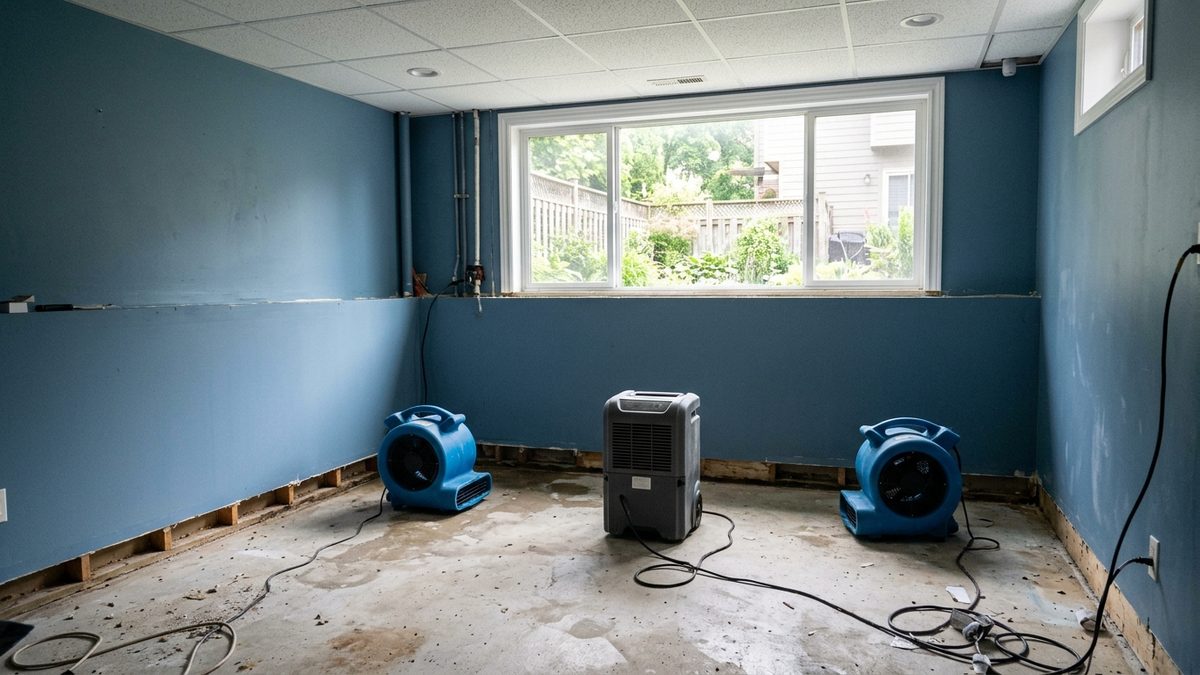
Finished basements add drywall, carpet, and furniture to the problem. Cleanup typically includes extracting water from carpet, removing baseboards, cutting drywall a foot or two above the waterline when needed ("flood cuts"), and drying the wall cavities. Clean-water losses caught early can often be dried in place. Groundwater and sewage losses usually require more removal.
Preventing the Next One
- Add a battery backup to your sump pump, or a second pump.
- Extend downspouts several feet away from the foundation.
- Make sure the soil slopes away from the house.
- Insulate crawl space pipes before winter.
- Have the crawl space checked once a year, ideally in the fall.
Insurance Note
Coverage depends on the cause. Water from a sudden plumbing failure under the house is often covered. Groundwater seepage and surface flooding usually aren't covered by a standard homeowners policy, and sump pump or sewer backup damage often requires a specific endorsement. Check your policy and see our insurance guide.
Frequently Asked Questions
Is a little water in the crawl space normal?
A damp spot after heavy rain isn't unusual, but standing water isn't something to ignore. It raises humidity in the whole house and can lead to mold and rot on the floor framing.
How long does it take to dry a crawl space?
After pumping and insulation removal, drying commonly takes several days, depending on how wet the framing got and the weather.
Do I need to replace the insulation?
Usually, yes. Wet fiberglass insulation loses its insulating value and holds moisture against the wood.