"Dry to the Touch" Isn't Dry
Drywall can feel dry while the framing behind it is still wet. Carpet can feel dry while the subfloor underneath stays soaked. Professionals don't go by touch. They measure:
- Moisture meters check the moisture content of wood, drywall, and concrete.
- Thermal cameras help spot cooler, wet areas behind surfaces. They're useful for finding water, but readings are always confirmed with a meter.
- Drying goals are set by measuring the same materials in a dry part of the house. A job is done when the wet materials match those readings.
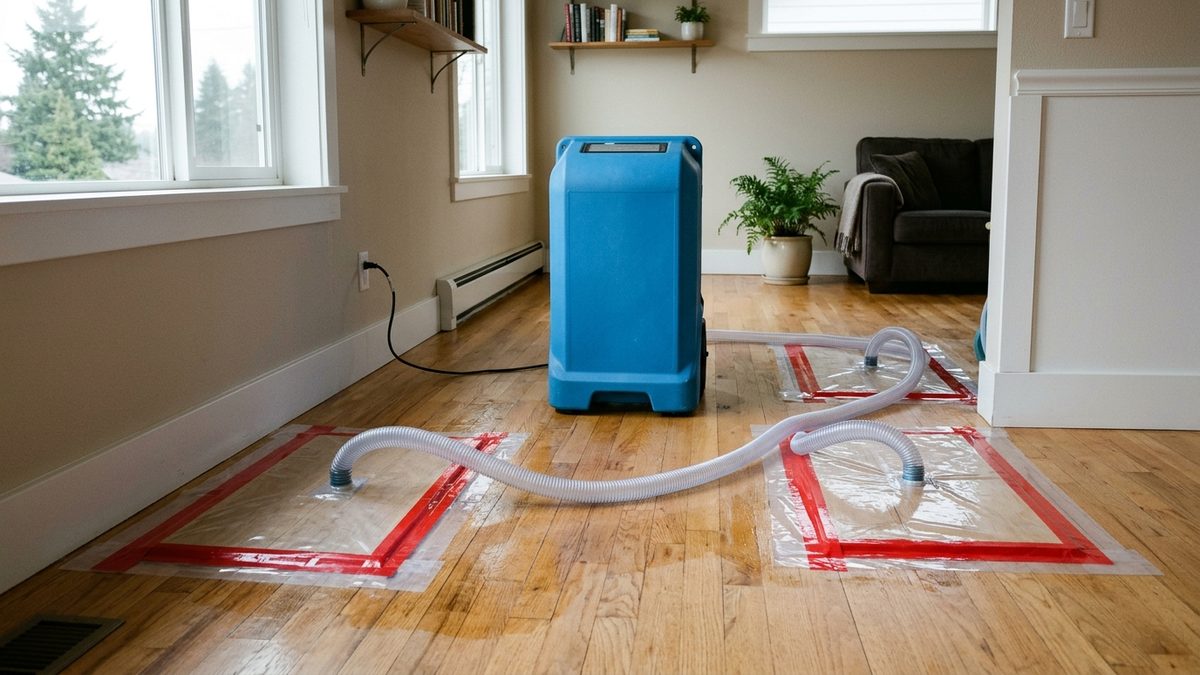
The Equipment
- LGR (low-grain refrigerant) dehumidifiers pull large amounts of water out of the air, even as the air gets drier.
- Desiccant dehumidifiers work well in cold spaces like crawl spaces and in some specialty situations.
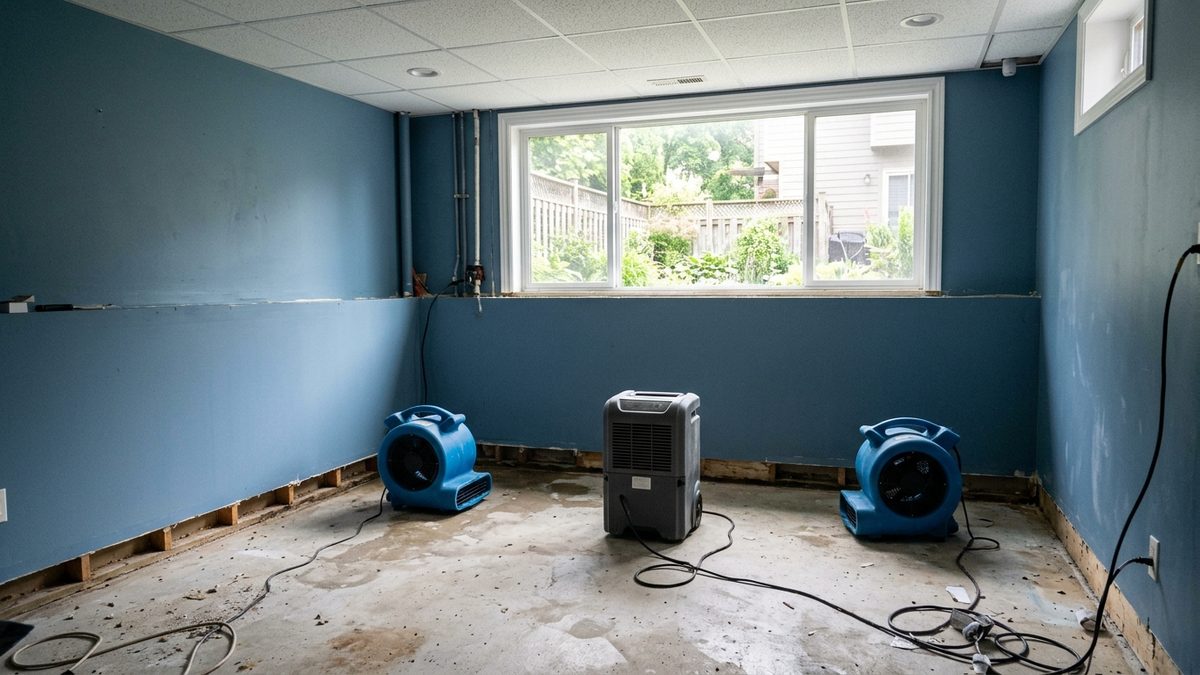
- Air movers blow across wet surfaces to speed up evaporation.
- Hardwood floor drying mats draw moisture up out of wood floors to reduce cupping.
- Wall cavity drying systems push dry air into walls through small holes, which can avoid tearing out drywall.
Why Dehumidifiers Matter in the Pacific Northwest
In dry climates, opening the windows helps. In a King County winter, outdoor air is cool and damp, so opening the house up usually slows drying down. Commercial dehumidifiers create the dry indoor air that pulls moisture out of building materials.
What to Expect
- Timeline: Many home drying jobs take about 3 to 5 days. Dense materials like hardwood and concrete, or very wet crawl spaces, can take longer.
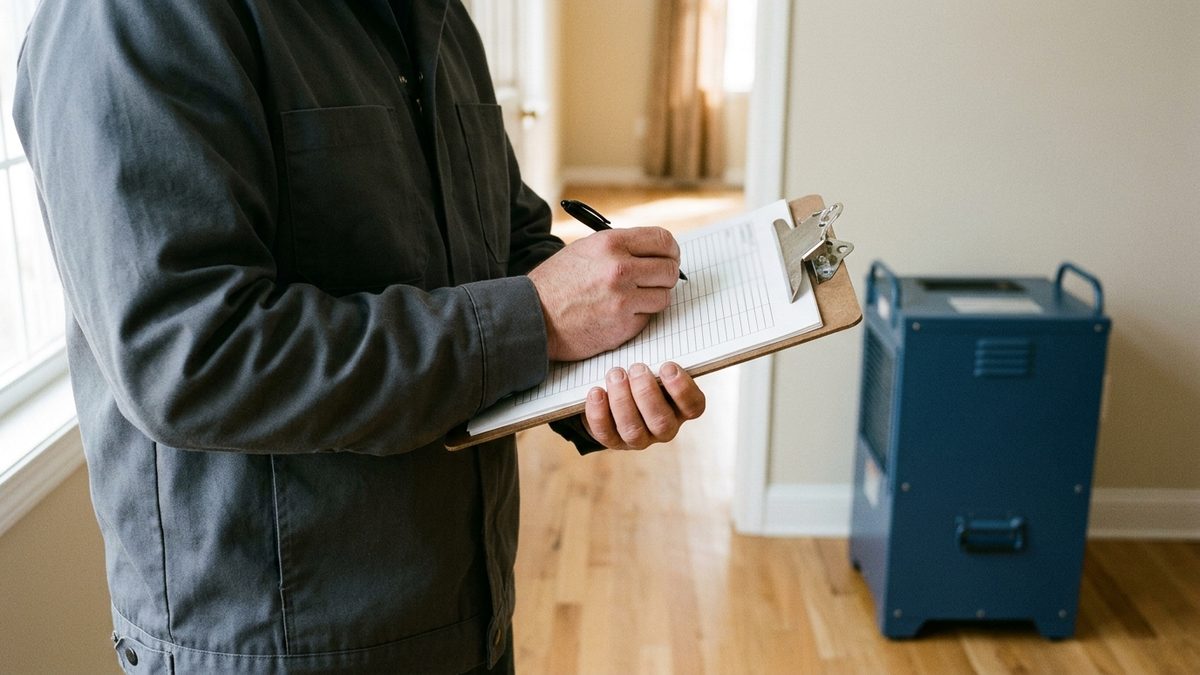
- Daily monitoring: A technician should take and record readings every day and adjust the equipment.
- Noise and power: The equipment is loud and uses a lot of electricity. Leave it running. Turning it off at night adds days to the job.
- Documentation: Daily moisture logs and photos are what insurance adjusters use to approve the drying.
Dry It or Replace It?
Drying in place usually makes sense for clean water caught quickly. Replacement is more likely when:
- The water was contaminated (sewage or outside floodwater)
- Particleboard or MDF has swollen, which is common in cabinets and some subfloors
- Laminate or vinyl flooring is trapping water underneath
- Materials have been wet long enough to grow mold
Frequently Asked Questions
Can I use my own fans and a store-bought dehumidifier?
For a small, recent clean-water spill, they help. For soaked subfloors, walls, or crawl spaces, household units remove only a fraction of what commercial equipment does.
Will my hardwood floor have to be replaced?
Not always. Fast extraction and mat drying can save many hardwood floors. Some cupping flattens as the wood dries. If it doesn't, refinishing or replacement may be needed.
Can I stay in the house during drying?
For most clean-water jobs, yes. Sewage cleanups and large losses may be different.